A Foodie Road Trip: North African Edition (Part One)
Hey all! I am back with an all new road trip adventure! This time it will be across the Atlantic in the North African country of Morocco. This place has always appeared as a mystical land to me since I was a child. I finally had the chance to drive around this country for a couple of weeks and explore the scenic beauty, the people, and all of the delicious food that it is famous for! I want to share some of my trip with you through photographs and experiences I had in the different regions of this amazing place. I will also offer you some tips on restaurants, food tours, places to stay, and also what you should avoid if you are visiting for the first time. So hop in the car, and take a road trip with me through the country of Morocco!
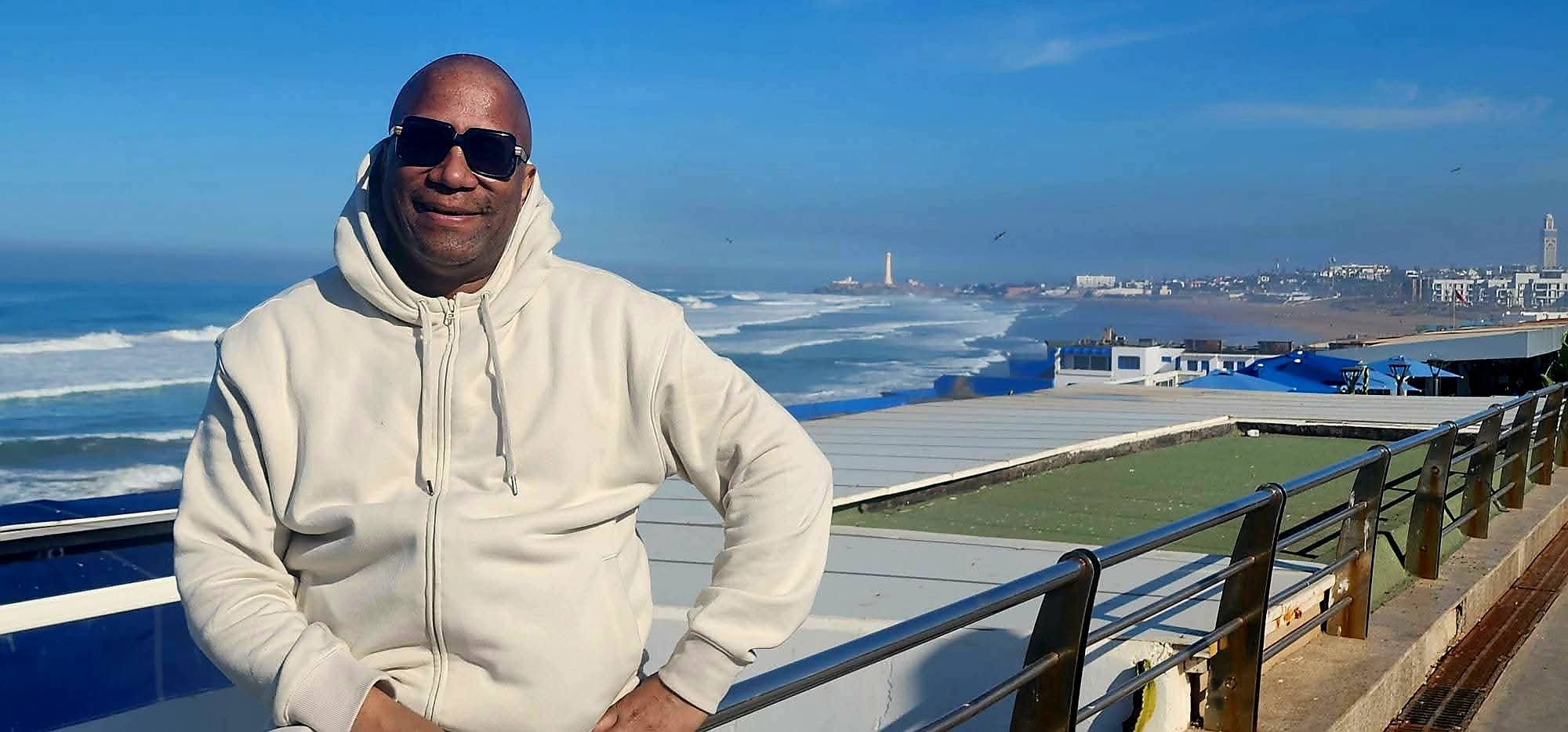
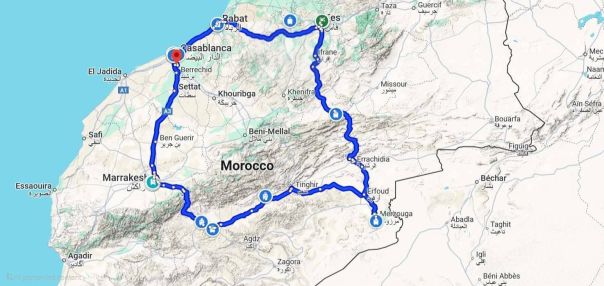
We started our road trip in the coastal city of Casablanca, which is one of the largest and most important cities in Africa, both economically and demographically. We were flying from New York (JFK), and our plan was to rent a car and drive our way through the country with 2-3 day stops in each of these places: Marrakech, Dades Gorge (High Atlas Mountains), Merzouga (Sahara Desert), Fez, Rabat, and then back to Casablanca before flying home. I would cover over 1200 miles of driving on this trip, which seemed daunting for a first time visitor. After clearing customs we purchased 2 sim cards for our phones which is highly recommended. You will see the kiosks for these in the airport. You will have three choices of sim card companies to choose from: “Orange“, “INWI“, and “Maroc Telecom“.
Pro Tip: If you are road tripping through Morocco like we were, I would purchase the Maroc Telecom sim card, mainly because of its wide coverage across Morocco, including the more remote regions and areas in the Moroccan Sahara desert.
I went directly to pick up my rental car and I did not to exchange cash at the airport. I decided to wait until I drove into the city to take advantage of the cheaper exchange rates. BIG MISTAKE. I never considered that once we exited the airport, there would be a cash toll on the highway, yikes! The woman at the toll booth did not speak English, and I spoke no French or Arabic. She turned down my US dollars and I had to get out of the car and ask the driver behind me for 6 Moroccan Dirhams (MAD) to pay, he didn’t accept my USD either but still gave me the coins I needed for the toll (embarrassing).
Pro Tip: Make sure you exchange some of your foreign cash BEFORE you leave the airport, whether you plan on taking a taxi or driving.
Driving in Morocco: One thing you should consider if you plan on travel to Morocco, is if you want to drive a car in the country. If you are, it will be necessary to acquire an International drivers permit (trust me you will need it). A road trip is not for everyone, but it can be a very rewarding experience and give you more exposure to the country than any tour group since you will be on your own time and not someone else’s. Keep this in mind: driving in Morocco is not for the faint of heart. New or timid drivers can be easily rattled, especially in the cities. I’ve driven in big cities for most of my life so after the initial shock of how reckless some of the driving here seemed, I soon settled right in to the flow as if I were a local. There are a lot of motorbikes that take over the road in some cases, pedestrians cross the street from anywhere because of the lack of traffic lights, donkeys, camels and sheep (in some places), overloaded trucks, tailgating and honking, not many use turn signals, and speed cameras on main highways. I even witnessed 4 people on a single motorbike, including an elderly woman, a young child, and a TODDLER on board, all without helmets. Highway speed signs that tell you to drop your speed from 100 to 80 to 60 to 20, all within a few meters of each other. Then there are the police checkpoints, everywhere! Here are a few examples of some of the hazards that I experienced while driving here:


Pro Tip: Follow the traffic laws! The Moroccan police are very strict when it comes to foreigners violating traffic laws. There are checkpoints at various places throughout the country, so beware all of you speedsters…
I also believe that the police officers here recognize which cars are rentals within the country, as I had seen many tourists pulled over for traffic violations. Unfortunately, I found this out the hard way as I was pulled over twice on the highway during our trip for speeding. Each time, the officers were polite and showed me video proof of the violation I had committed. Although I was only 3-5 mph above the limit each time, I paid the tickets on the spot each time and they sent me on my way (another good reason to have plenty of cash on hand). The fines can range in prices, as I paid 150 MAD ($15 USD) each ticket. We met a couple from Holland that had a stop sign violation that cost them 700 MAD ($70 USD). I was also pulled over by an officer who just wanted to talk to us, find out what country we were from and he ask us if we were enjoying our vacation. He expressed his concerns about the California wildfires that were still raging, gave us many well wishes then let us go on on our way. That was one of the highlights of this country, most of the Moroccan people we met were really friendly and welcoming.


We only had two full days in Casablanca and we were staying in an AirBNB in the Oasis quarter. Our wonderful host gave us a few restaurant recommendations and we were off to grab some cash and eat on the beautiful Atlantic ocean coastline. Eating in Morocco is very affordable if you are on a budget, and there are upscale options available as well. Most of the time we would pay less than 200 MAD ($20 USD) per meal to feed us both. Be prepared to eat a LOT of tagine dishes. A tagine is a cone shaped clay cooking vessel that is used to slow cook savory stews and vegetables. In Morocco, street food and restaurant “snacks” include savory options like grilled meats, Moroccan sandwiches, tagines, and sweet treats such as dates, sugared peanuts and M’semen (fluffy Moroccan pancakes). These are normally sold at smaller street food stalls and restaurants.


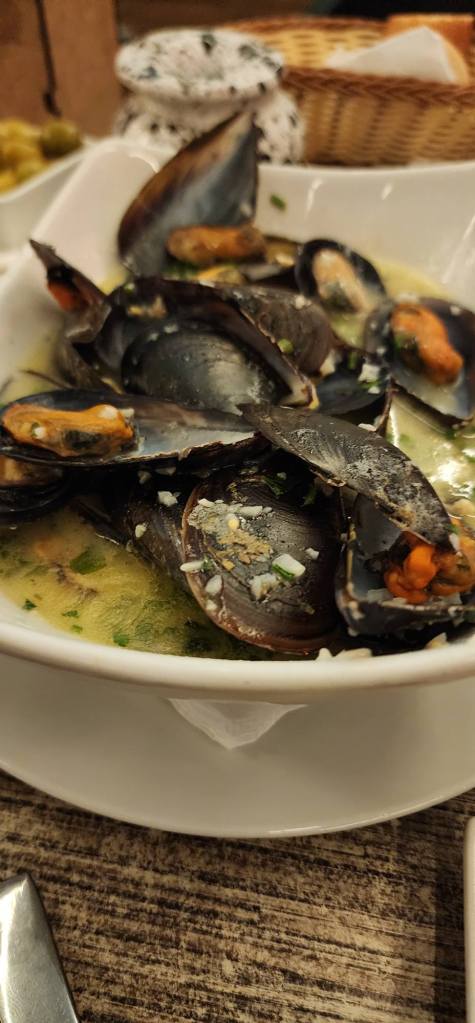
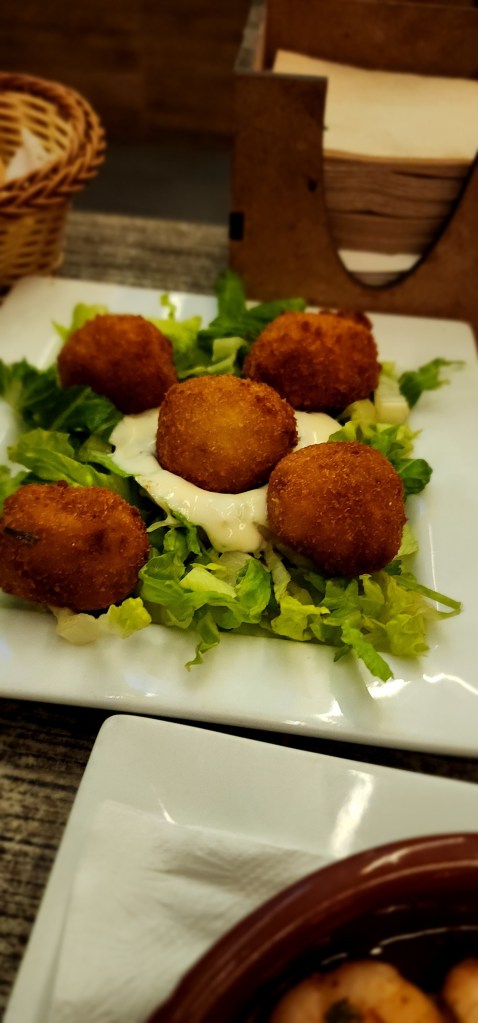
We came upon the restaurant Snack Taghazout on the waterfront and purchased 2 grilled “mixed meat” sandwiches that were a mix of beef spleen, chicken, and lamb, topped with olives and pickled vegetables. The sandwich itself did not look impressive, but that was deceiving, it was huge on flavor and perfectly seasoned, we were off to a great food start. We had dinner at Brasserie Guillaume Tell which serves Moroccan & Spanish fusion cuisine. We ordered some delicious tapas dishes, with the spicy shrimp, mussels with saffron garlic sauce, and chicken croquettes as the highlights of the night.

Pro Tip: Be prepared to do a LOT of walking while traveling the country. We had a car and my smart watch still logged 122 miles of walking and 113 floors climbed, this is without taking any major nature hikes.

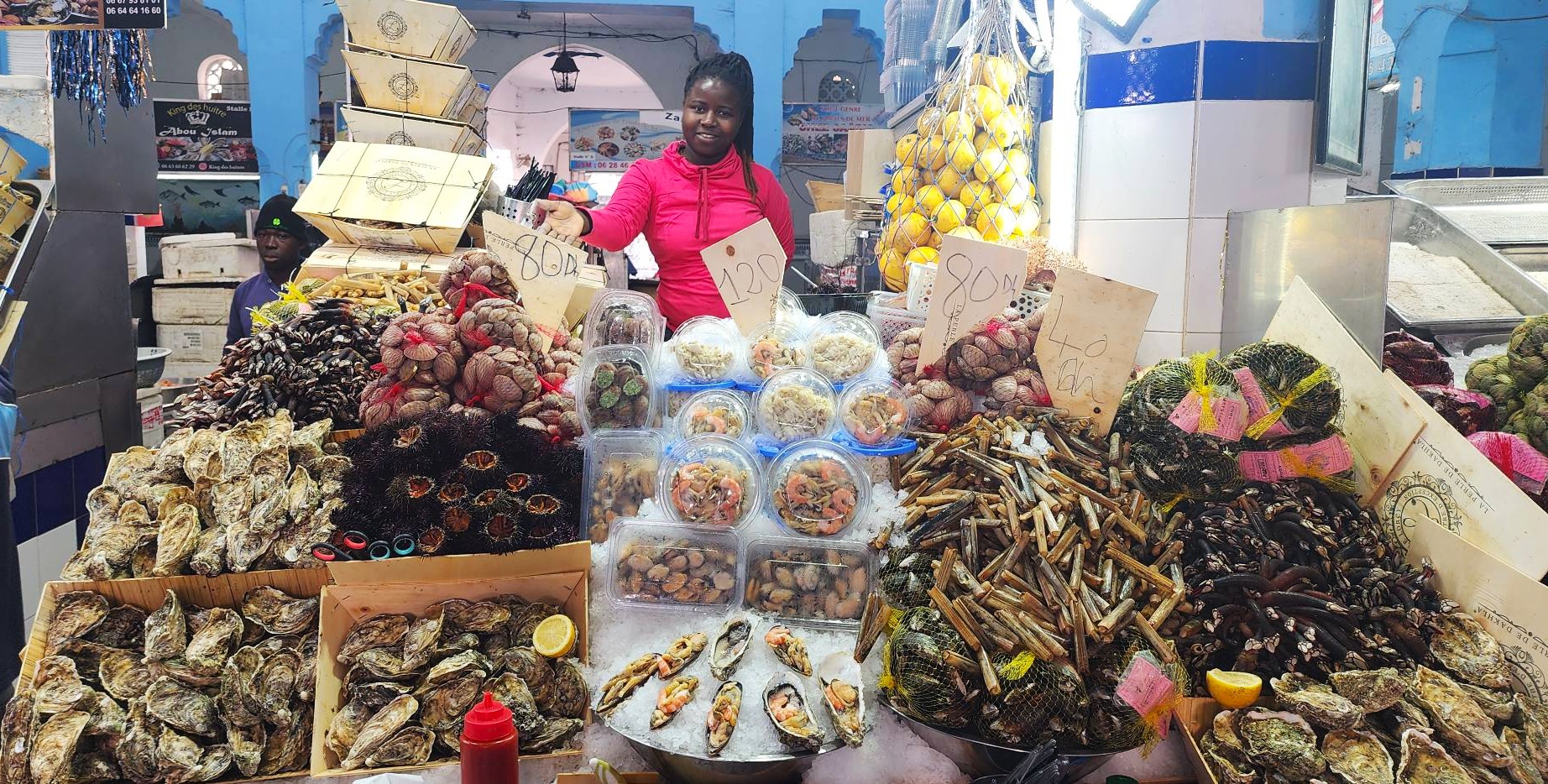
The next morning was spent visiting the Hassan II Mosque , which is an impressive Muslim temple. It is the second largest functioning mosque in Africa and, is the 14th largest in the world. It has the capacity for about 105,000 worshipers at a time. This is the only Mosque you can enter in Morocco if you are not Muslim. Visiting is a must-do if you are in Casablanca. We then walked to towards the old city for lunch, stopped by Rick’s Cafe for pics (made famous by the movie Casablanca), and ended up in the Central Market where we tried some oysters stuffed with shrimp, razor clams, and sea urchin from Stall #1 (pictured at top of page). I then purchased some humongous Carabineros shrimp which are large, bright red prawns caught in the Eastern Atlantic and Mediterranean Sea. We took them around the corner and had one of the local restaurants grill them for us. Delicious!


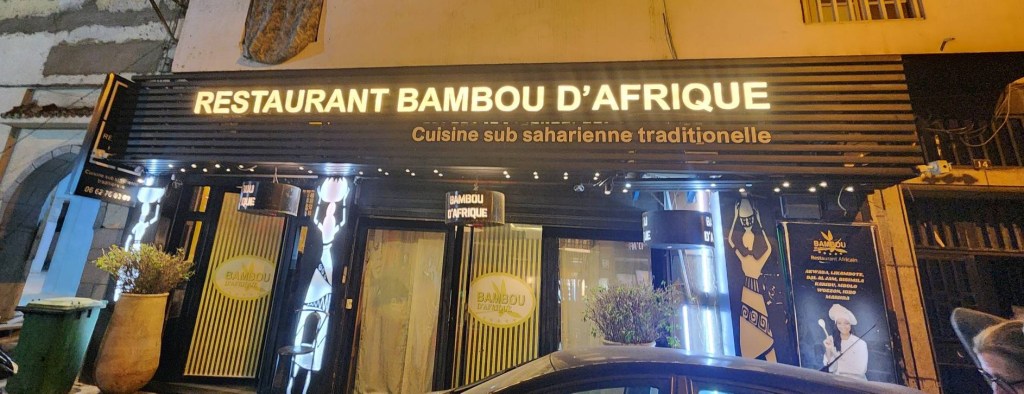
The last night we spent here, we opted for a taste of Sub-Saharan African food and visited Restaurant Bambou d’Afrique. This place mainly specializes in cuisine from Côte d’Ivoire, but they prepare food from many regions of Africa such as Senegal, Congo, Gabon, Camaroon, and Nigeria. We chose to go with Senegalese dishes, and Emily ordered the lamb Mafé, I had the Chicken “Chepper”, and both dishes were amazing, especially after washing it down with some ice cold Bissap (Sorrel/Hibiscus tea). We also were given a sample flight of 4 African house made juices that were delicious. The food culture in Morocco was on fire for me at this point, and it was only day 2! The next morning we were to take the two and a half hour drive to the city of Marrakech. We had breakfast at this great French/Mediterranean Bistro named OLEA, where they served us a filling, delicious meal before we hit the road.


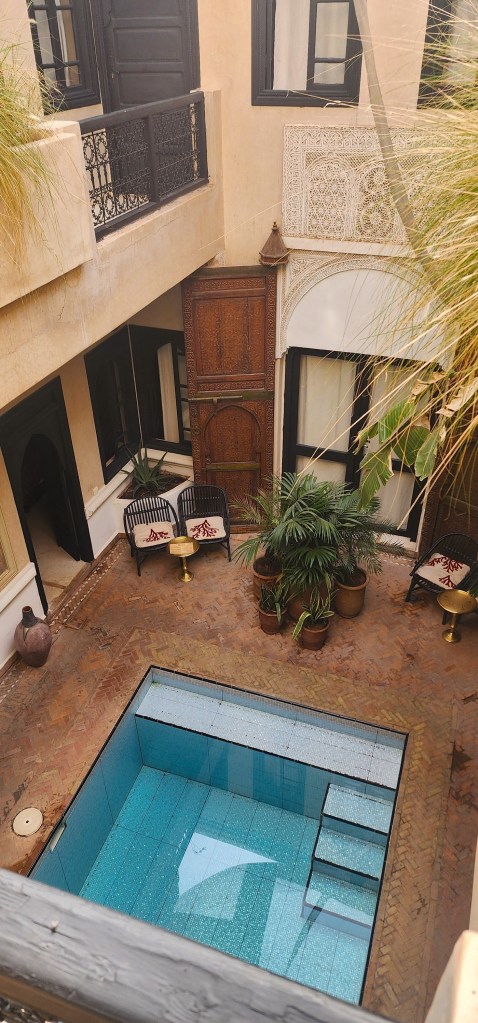
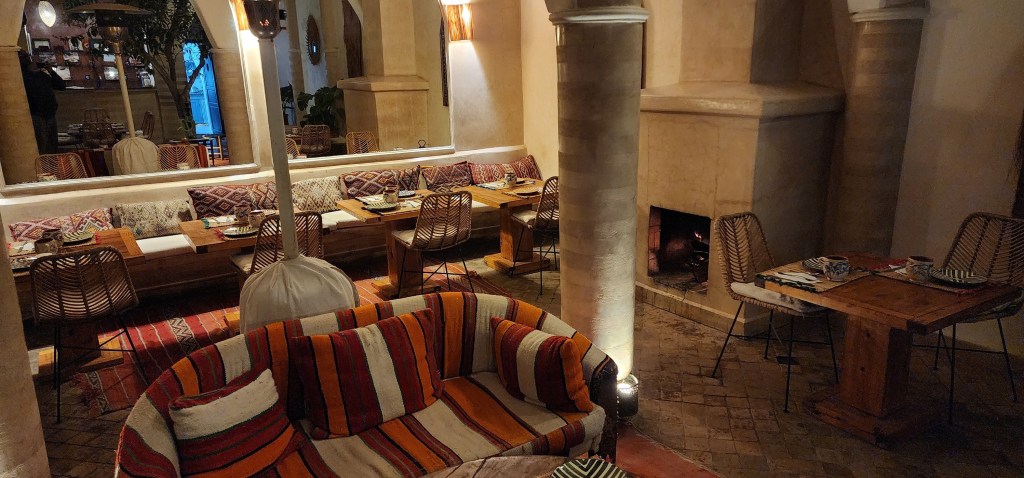
After the drive through a very scenic countryside we arrived in Marrakech late morning to experience bustling crowds and traffic. We booked a few nights in the beautiful Riad Sindibad which is in the northwest part of the medina (highly recommended). A “medina” is the old part of a town or city, found in many countries of North Africa. If you are driving a car this place is a great option since it is located near the Bab Yacout gate and about 250 feet from car parking. This also eliminates the need to pay someone to drag your luggage through the crowded souks that features masses of people, donkeys and many motorbikes in narrow alleyways. A “souk” is a traditional open-air marketplace or bazaar commonly found in Middle Eastern and North African countries. Riad Sindibad is also located in a residential area of the medina which is a good reprieve from the chaos and noises of the markets when you finish your day. Staying in a riad is a fun experience and truly makes you feel like you are a resident, also most of them include breakfast every morning which is a huge plus. A riad is a traditional Moroccan house with an interior garden or courtyard, in this case the Riad Sindibad had a courtyard that sported a dining room with a orange tree, fireplace and a pool.

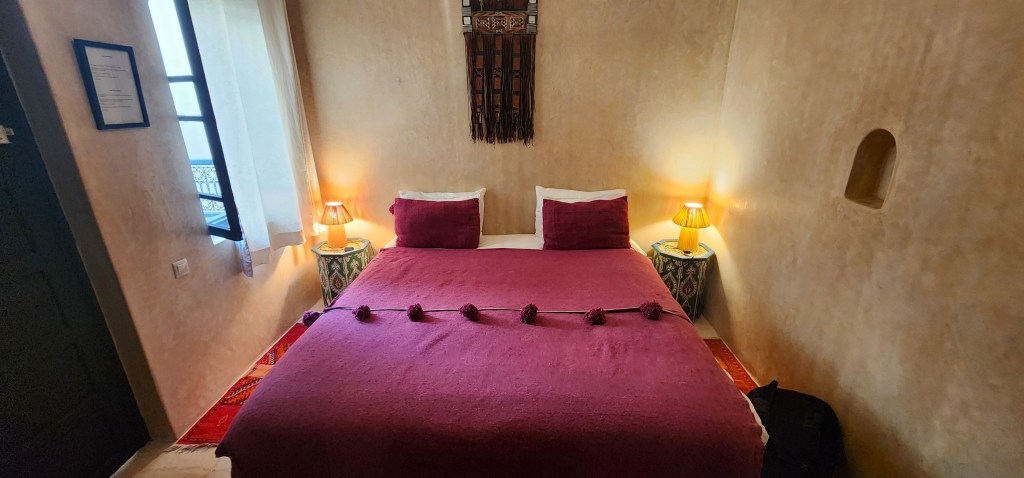
Pro Tip: Throughout Morocco you will encounter guys wearing yellow or orange construction vest and guiding you on how to park whether you need them or not. I would tip them a couple of coins just to keep your car safe. I was staying in this city for 3 nights and had no plans on moving the car so I tipped one of the attendants, Hachim, 50 MAD ($5 USD) to keep an eye on the car over the weekend and it worked out fine. He also helped us get our luggage into the Riad.
Prior to our visit to Morocco we had done a lot of research on what its like to travel here. One of the things a lot of vloggers and bloggers allege, is that Marrakech is a very scam filled place, especially in the infamous Jemaa El-Fnaa Square. It’s in my opinion that while scams happen here, they are no different than most cities around the world. Remember, in the medina you are in a heavy shopping district so you have to expect that there will be hustlers, fake guides, pick pockets among others. The only scams i encountered were with the snake charmers and other animal performers that urge people to take a picture of their animal, then they demand you pay them for it after the fact. You should stay away from these folks because often these animal are being abused, especially the snakes which are de-fanged or their mouths are sewn shut. Then you have the henna ladies who try and grab your arm without permission and write on it, then aggressively demand money. Also beware of the guys that hang around in the souks and tell you that the direction you are walking is closed off and then try to guide you to a friends shop where they earn a commission on sales, although this is less of a scam and more of a hustle. Your best bet is to be polite and decline their help. Most of the time you need to participate in a scam to be had, so use common sense when dealing with some folks and always stay aware of your surroundings. If it does not feel right to you, it probably isn’t and you should walk away. We felt totally safe throughout Morocco while visiting.
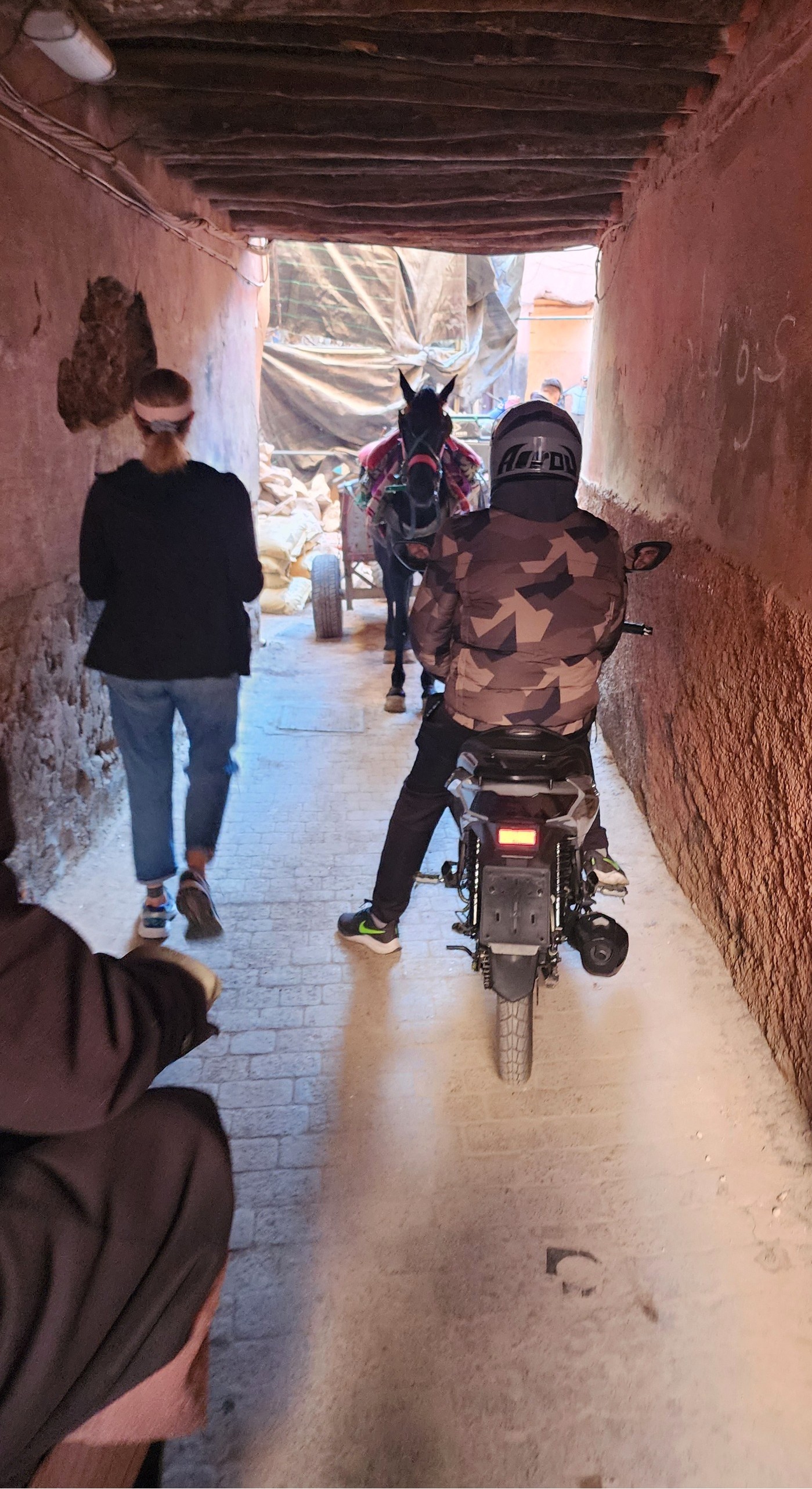
Pro Tip: Walking the souks in Marrakech can be quite challenging at times. You will be sharing 7-12 foot wide alleys with tons of shops, throngs of tourist, speeding motorbikes and donkey carts moving supplies. So expect to be jostled, a whole lot.
After getting set up in the riad we were off to our first food adventure. We booked a night time food tour with local chef and tour guide Mustapha. This was a delightful 3 ½ – 4 hour tour with visitors from different countries exploring Jemaa El-Fnaa Square and the markets. It also was an introduction to traditional Moroccan street food. We started at an small shop where we sampled different types of fresh olives and something I never tried before, Khlea. This is dried beef preserved in fat and spices. Flavor-wise it was seasoned well, and very beefy and this is commonly eaten with eggs for breakfast. I ended up purchasing a tub of it to bring home (recipe coming soon). Next we moved on to a butcher that specialized in chopped beef spleen sandwiches. His line was long but the sandwich was bursting with spices and worth the wait. Next up, Chez Hassan Booth #70 had a very spiced hot drink that consisted of tomato juice, ginger, galanga, cardamon, cloves and quite a few more spices. It was good, but not my favorite. We then went to a rather crowded corner of the Square to a woman selling Harira, which is Morocco’s most popular soup. It’s usually eaten to break the daily fast during Ramadan, it is combination of pasta, lentils, and chickpeas. Served with it were dates, lemon, and a sweet fried pastry, so good! Next up were Moroccan donuts that were a little greasy yet fluffy and topped with an argan oil and honey mixture served with mint tea.
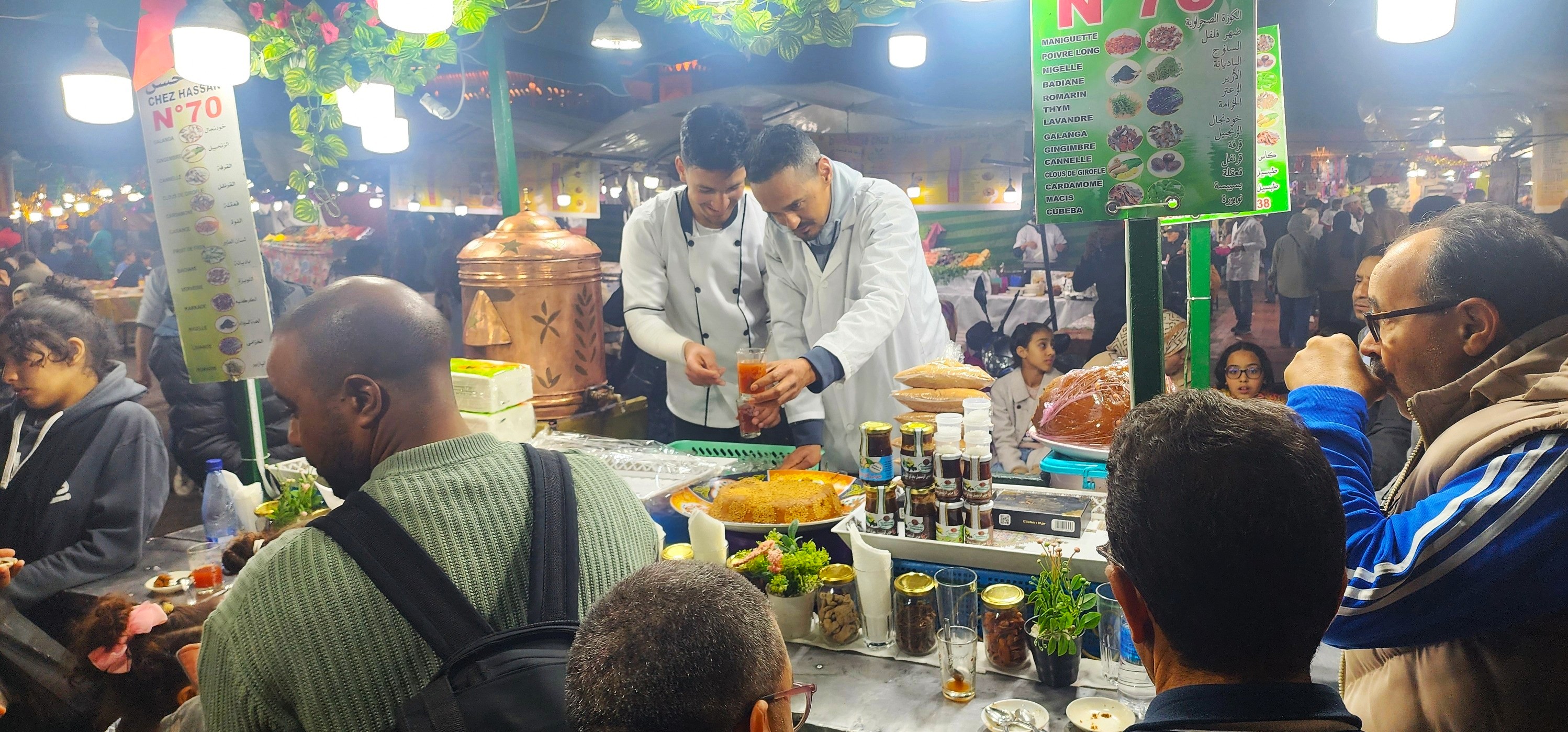

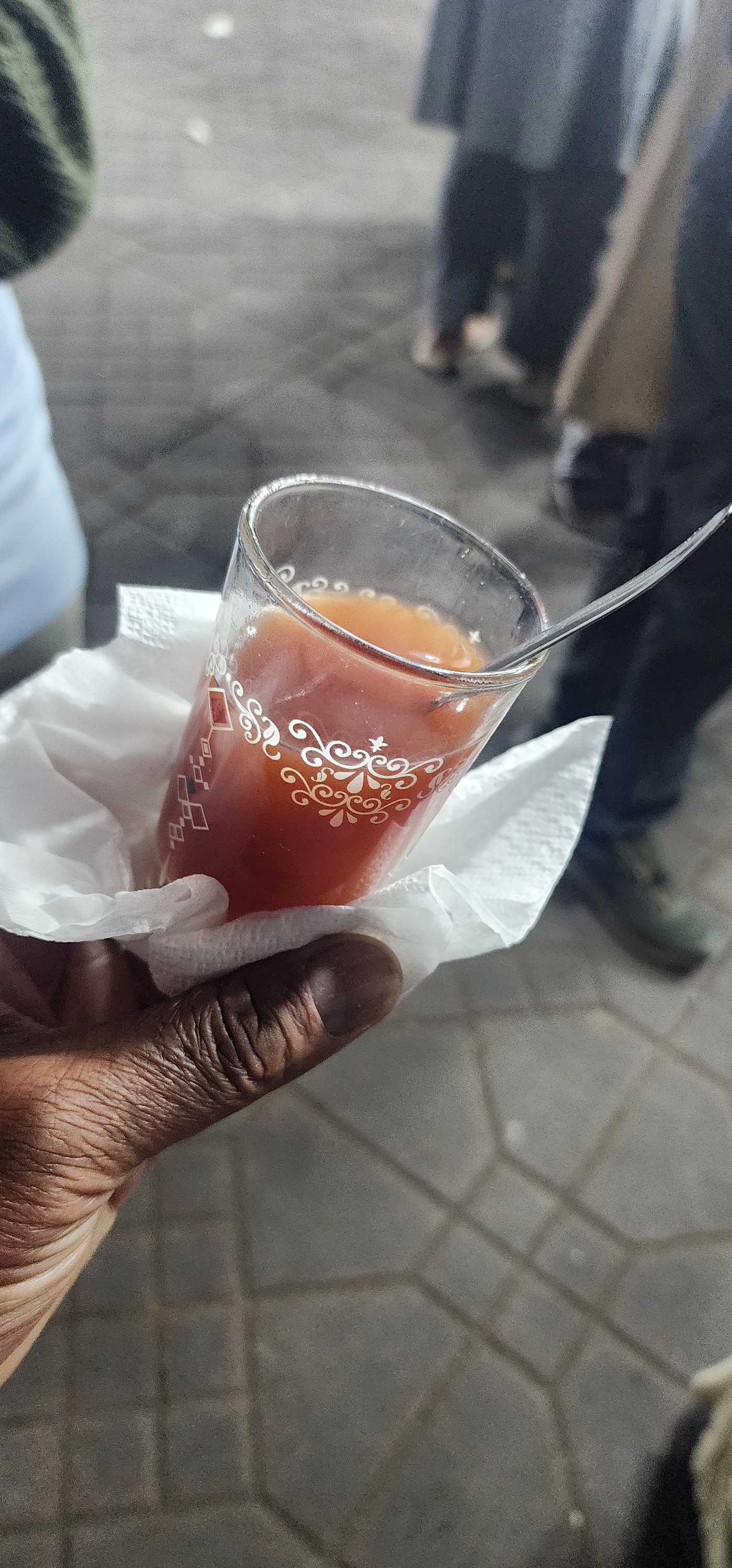
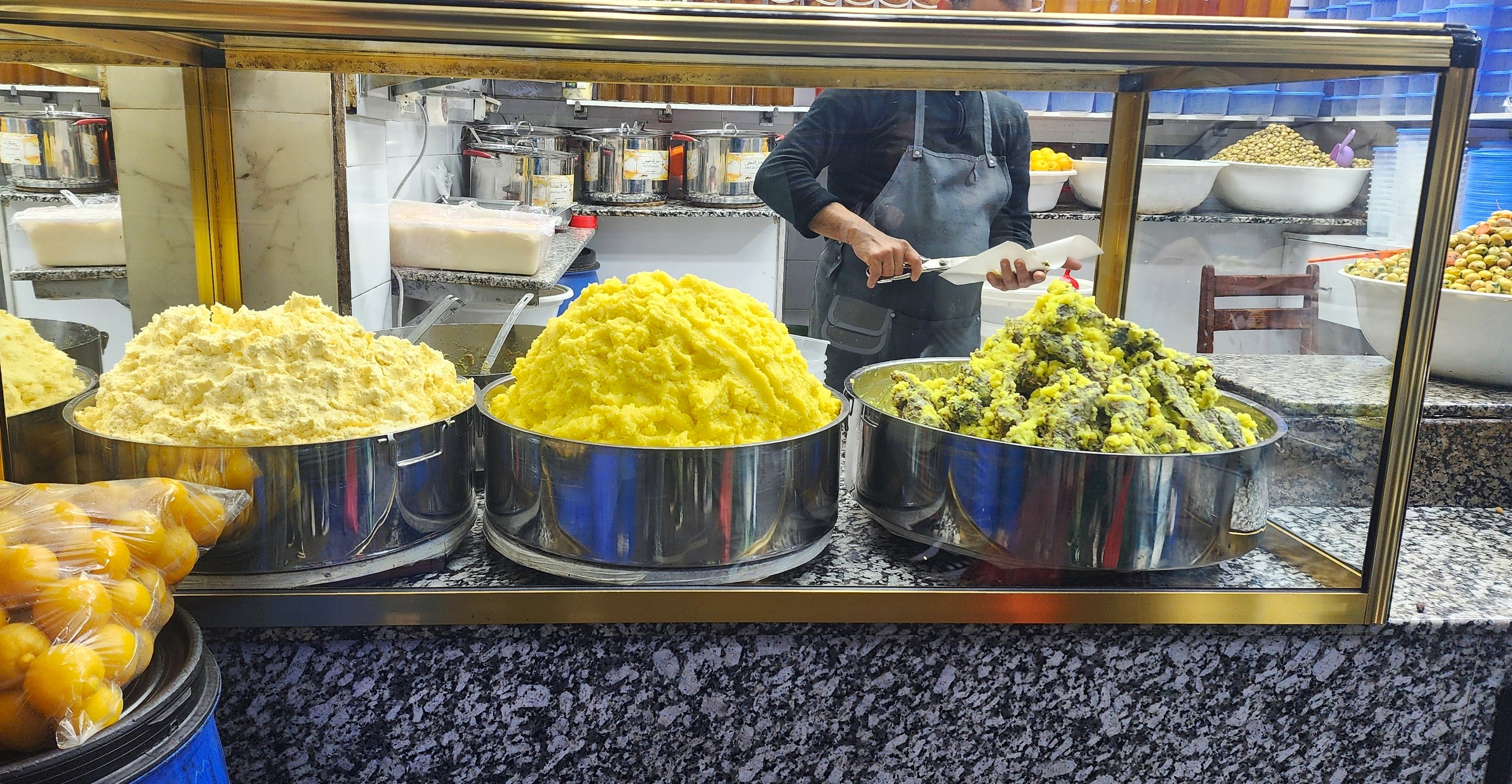

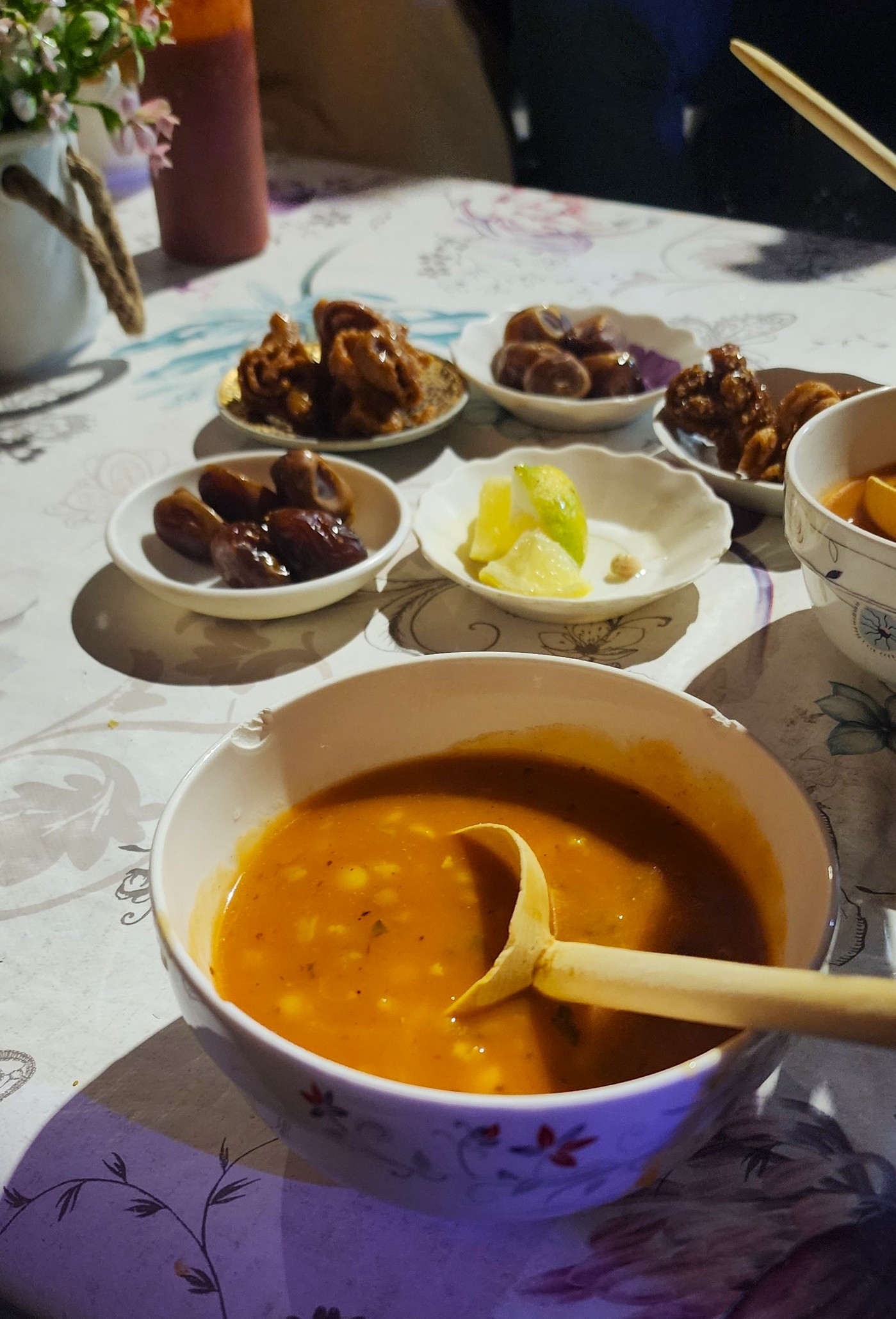

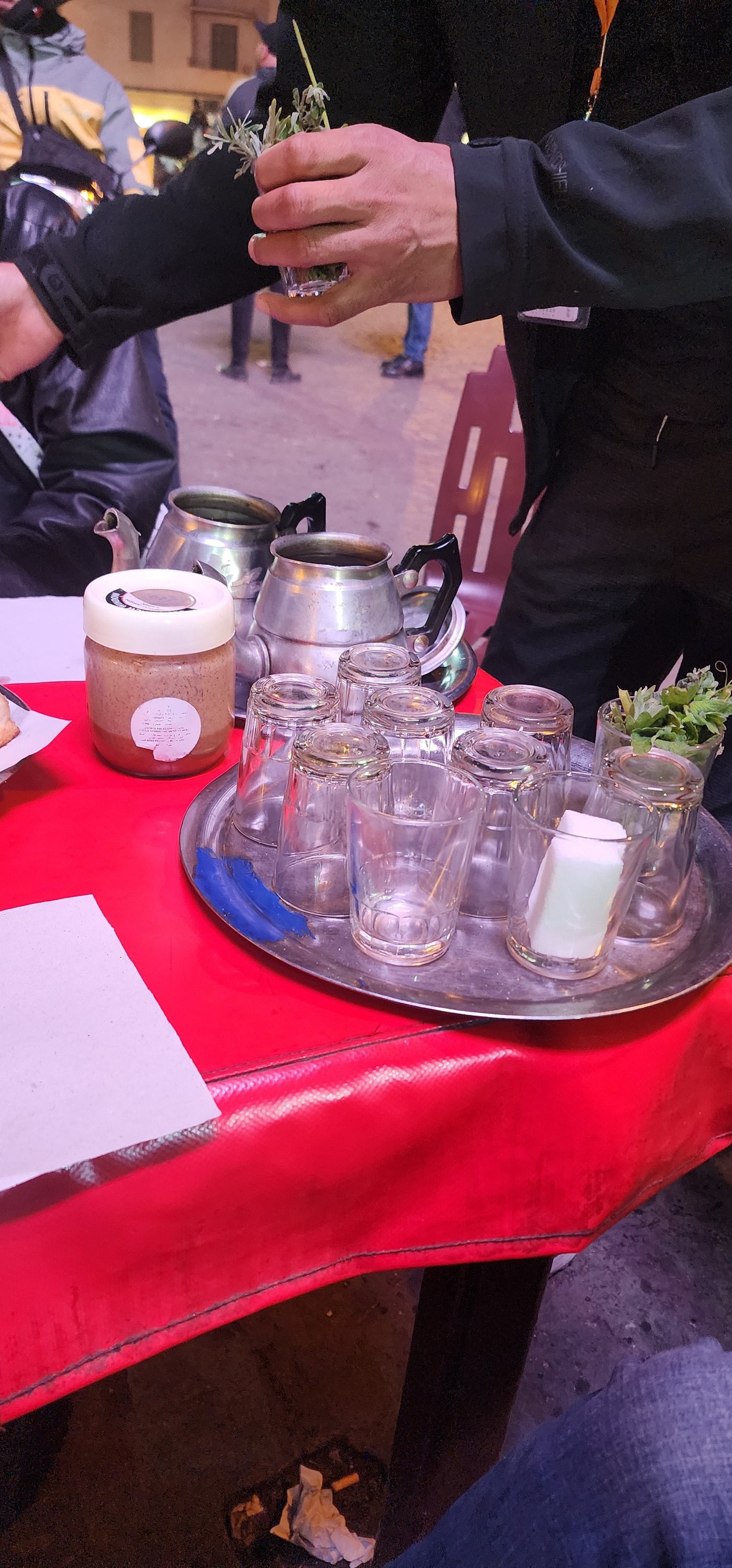



Pro Tip: It can be a good idea to take some kind of food or guided tour at the beginning of your visit. This will help you to get your bearings and be able to navigate the medina on your own later on. Always use a certified tour guide to avoid scams we booked Mustapha through AirBNB.
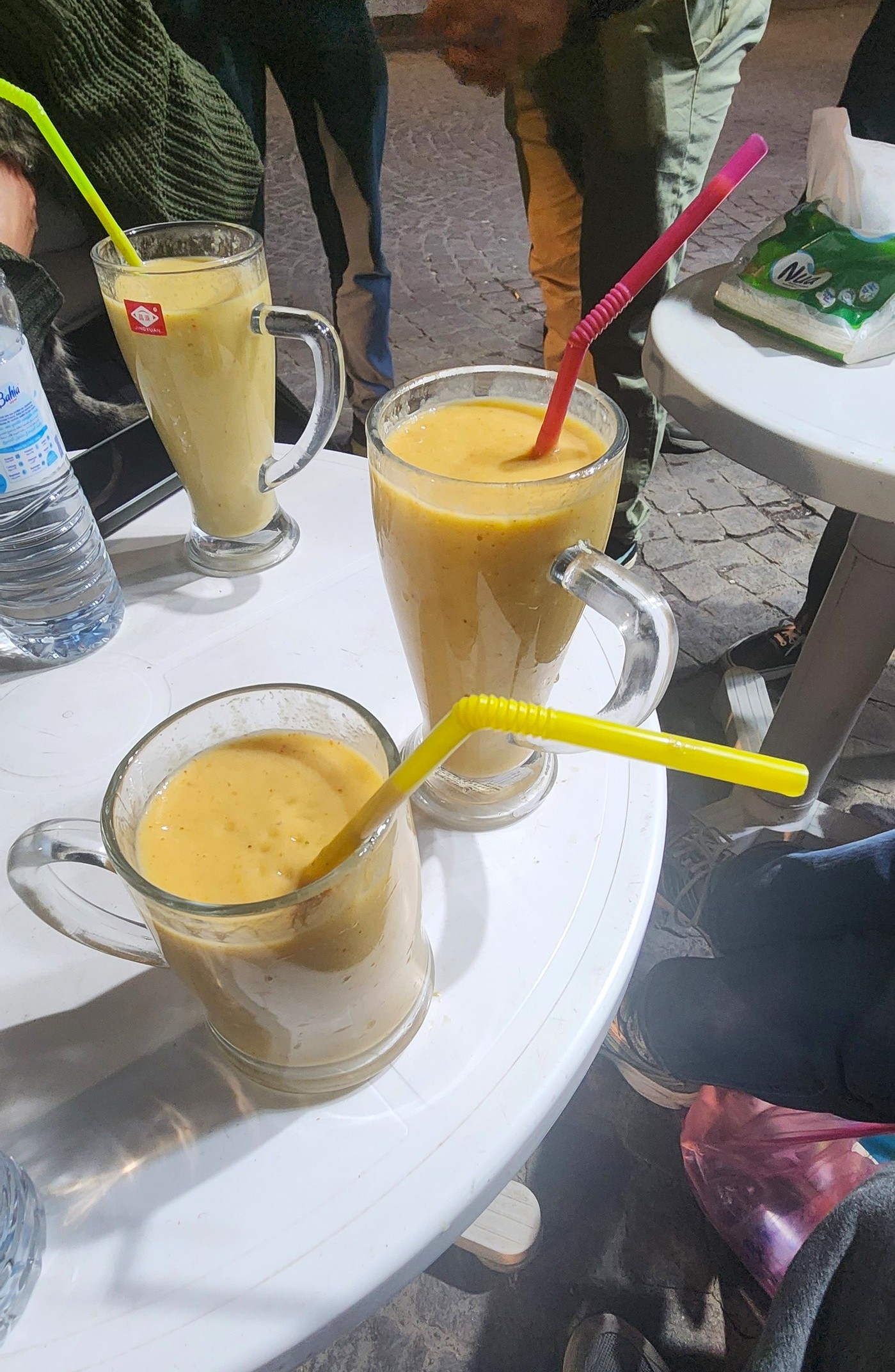
Mustapha then surprised us with a meal of his own making, beef Tanjia. “Tanjia” refers to both a dish and the tall, urn-like clay pot in which it’s cooked in. It originated in Marrakech, Morocco, and it is traditionally slow-cooked over hot embers. He poured the contents onto two platters along with fresh bread he baked and we dug in, man this was so delicious. The combination of Moroccan spices, preserved lemon, saffron, and huge pieces of very tender braised beef really made this quite a good dish. By now I was stuffed and happy. Our guide then informed us that the tour had a couple of more stops — say what!? He guided us over to the Jewish district for some chicken curry tagine with chick peas. The area was full of street food stalls and mostly locals eating and enjoying themselves. The chicken was so tender and delicious and it was at this point that I was in a food coma, and was ready to go to sleep. Our last stop was at a dessert shop where we had mixed mango fruit smoothies and pastries. Great food and a fun night with new friends is all you can ask for while traveling!

The next morning we were up early to explore the souks and do some souvenir shopping. It was also Emily’s birthday! Most of the shopping and dining in the souks are pretty affordable depending on what you are looking for. The medina is a sight to behold, and you will most definitely at times get lost in the souks trying to navigate the narrow alleys full of shops, people, motorbikes, and service animals. Don’t panic, you will eventually find you way through. Also, be ready to negotiate prices when shopping. Bartering in the medina is expected at most shops with a few exceptions, it should always be done politely. I would start negotiating at 40% of the asking price and work from there. Remember, the best price is the price that YOU are happy and content with spending. While bartering, if the seller lets you walk away, he stood to make zero profit.
Pro Tip: If you are uncomfortable bartering prices with shopkeepers there are a couple of places to visit with fixed prices on goods, especially in the new city. Ensemble Artisanal Chamber of handicrafts right outside the Medina is such a place. They have fixed prices and all things sold there are authentic made in Morocco products.
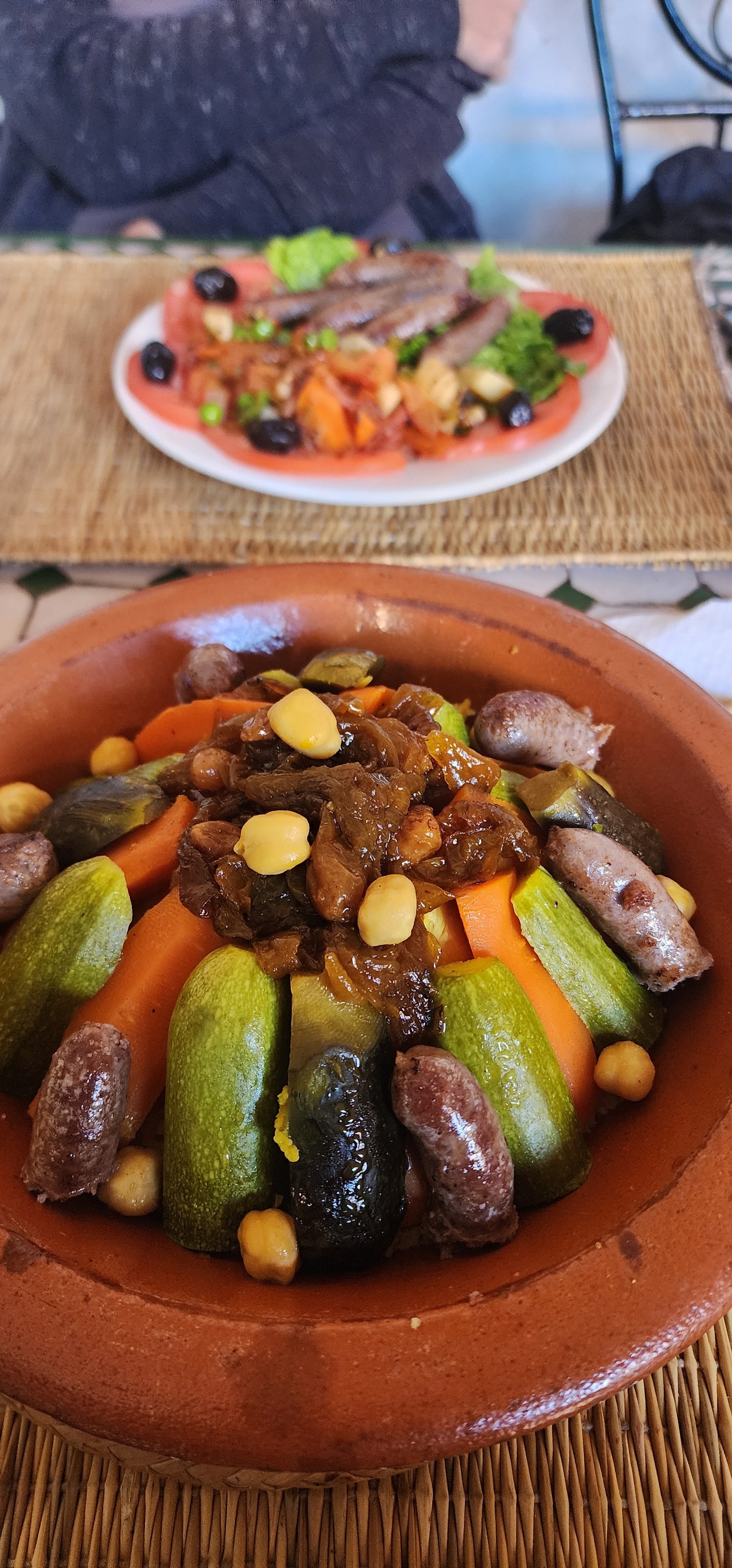
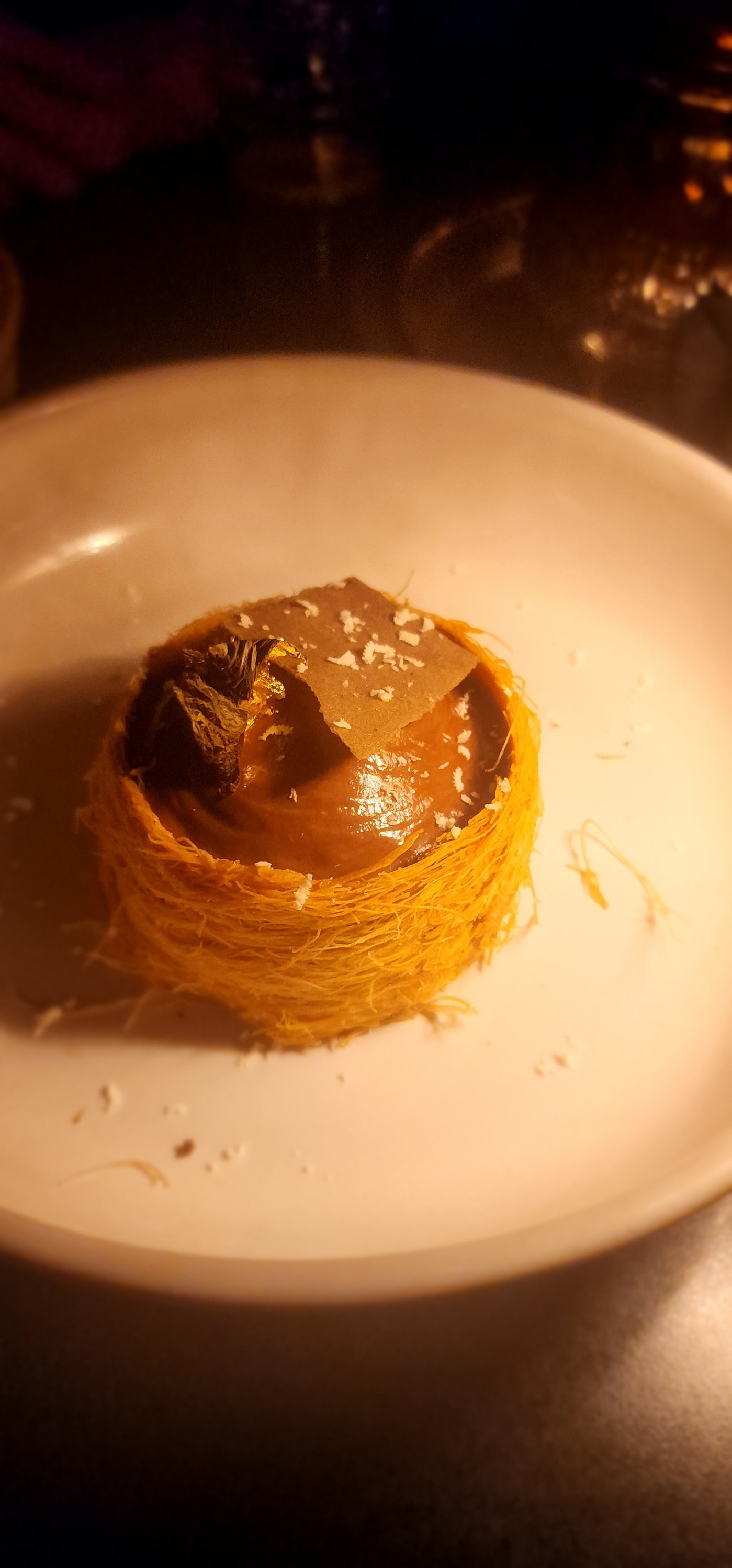
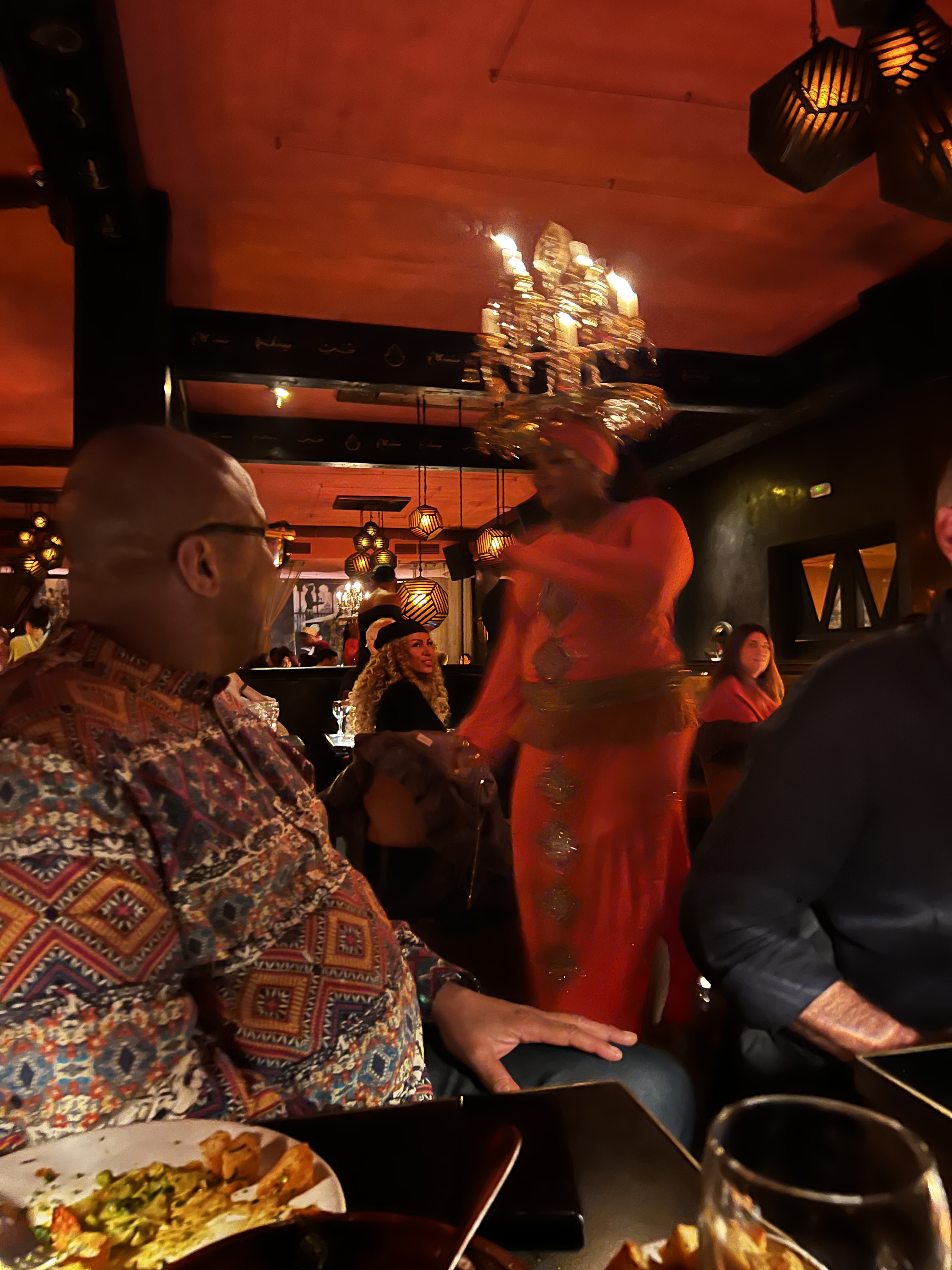
We ate lunch at Café Anosfa which is located in the Ensemble Artisanal, I had the Cous Cous Royale and she the Kefta Tagine, and both were really good. Next, our walk took us to Le Jardin Secret which is an urban respite in the middle of the chaotic Souks. This garden featured different types of trees including orange and lemon trees. The place was cool, but small and for the 100 MAD ($10 USD) price, there was not enough to see to justify the cost, plus it became crowded really fast. We visited Madrasa Ben Youssef which is an historic landmark with beautiful Islamic architecture which we enjoyed immensely. After a long day of walking it was time to head back to the riad to get ready for Emily’s birthday dinner at the upscale restaurant Comptoir Darna. This restaurant was located in the prestigious Hivernage district in the new city. It is billed as one of the best restaurants in Marrakech. It’s more of a dinner and show that lasts at least 3 hours, and reservations should be made in advance. We ordered lobster pastilla (a sweet and savory layered Moroccan pie), Prawn Tagine with peas, spinach and basil bisque, 8-hour slow cooked lamb shoulder that was melt in your mouth goodness. The most fun part of this evening was the impressive belly dancers. I mean these ladies were spinning around and performing all kinds of moves while balancing trays full of burning candles on their heads. Bravo! This ended another fun and food filled day.



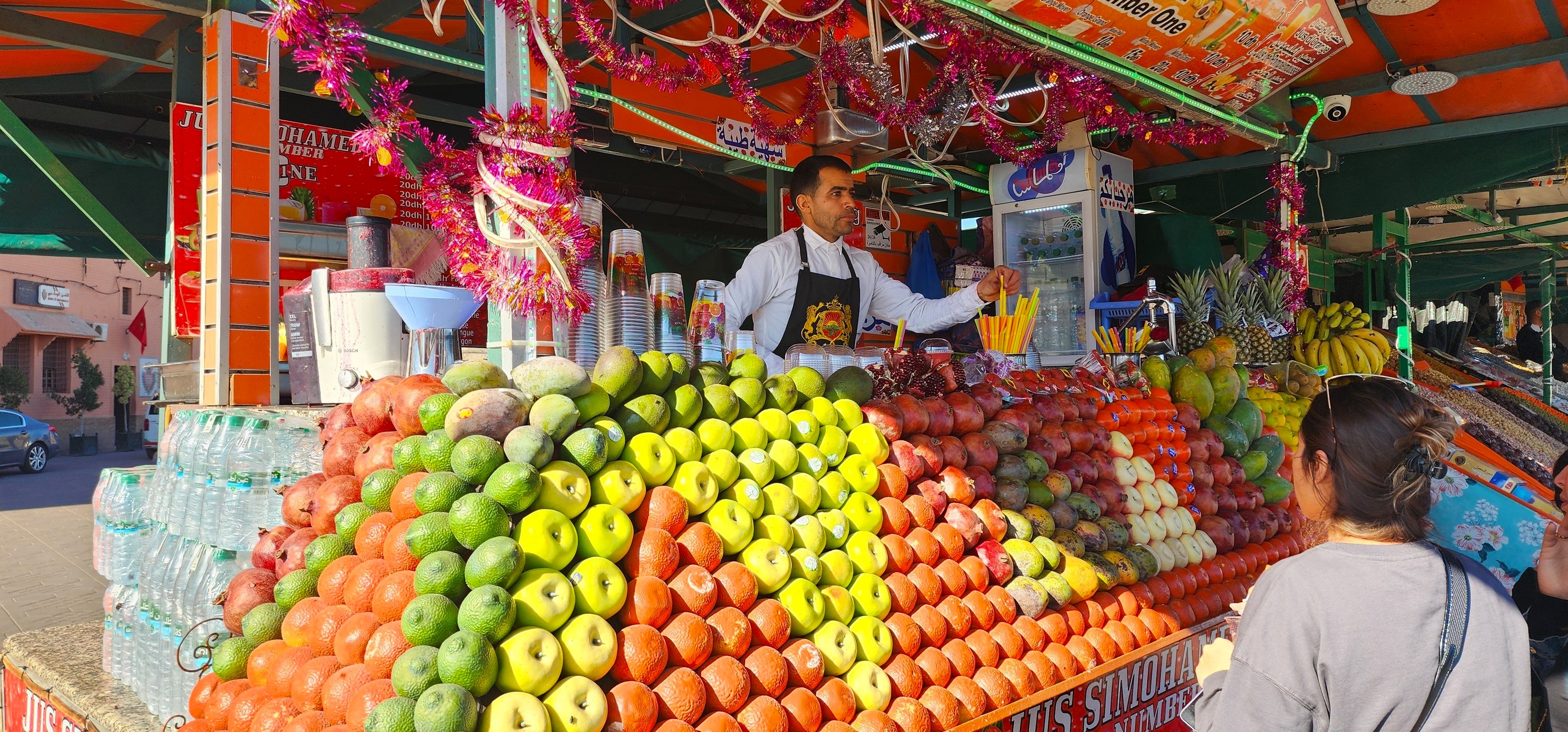
Our last day in Marrakech was spent sightseeing and exploring the Jemaa El-Fnaa Square. We had lunch on the rooftop at Chez Chegrouni, where we enjoyed the fresh squeeze fruit juices Morocco is famous for, along with grilled meats and Moroccan tacos, a popular street food that are grilled wraps stuffed with chicken, beef kefta, cheese, and various sauces. Our plan for dinner at Le Douar Medina located in the Moroccan Culinary Museum was foiled when we showed up and discovered they were closed. We were lucky to stumble upon another great place close by, Restaurant Black Chich which is a restaurant that does a fusion of foods from sub-Saharan Africa and Morrocan Berber cultures.

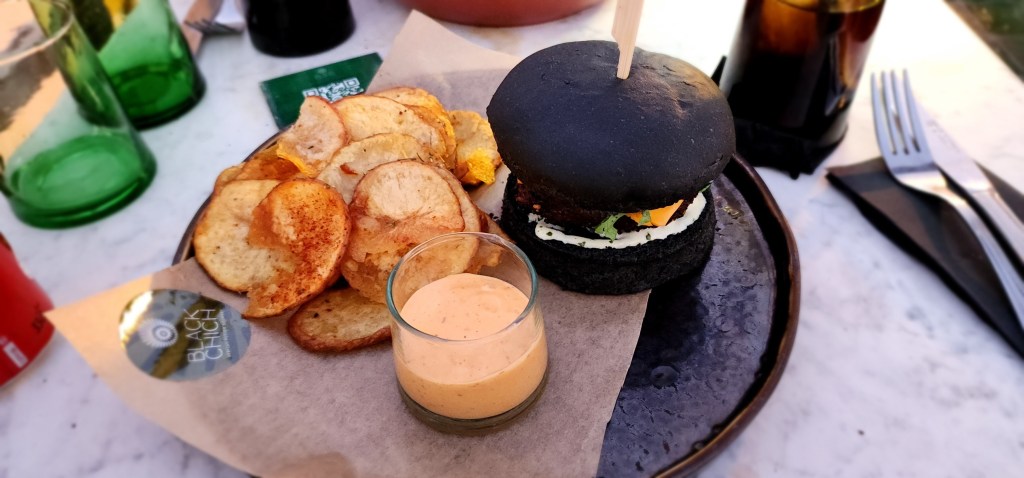

I ordered the “black” camel burger which was a camel steak marinated in African spices on a black sourdough bun, with cheddar and African green sauce. This burger was slamming! Emily had her second Mafé dish of the trip, except it was beef this time, and it was better than the first. We enjoyed dinner while watching the sunset on the rooftop, returned to the riad and prepared for the journey the next day to the High Atlas Mountains.

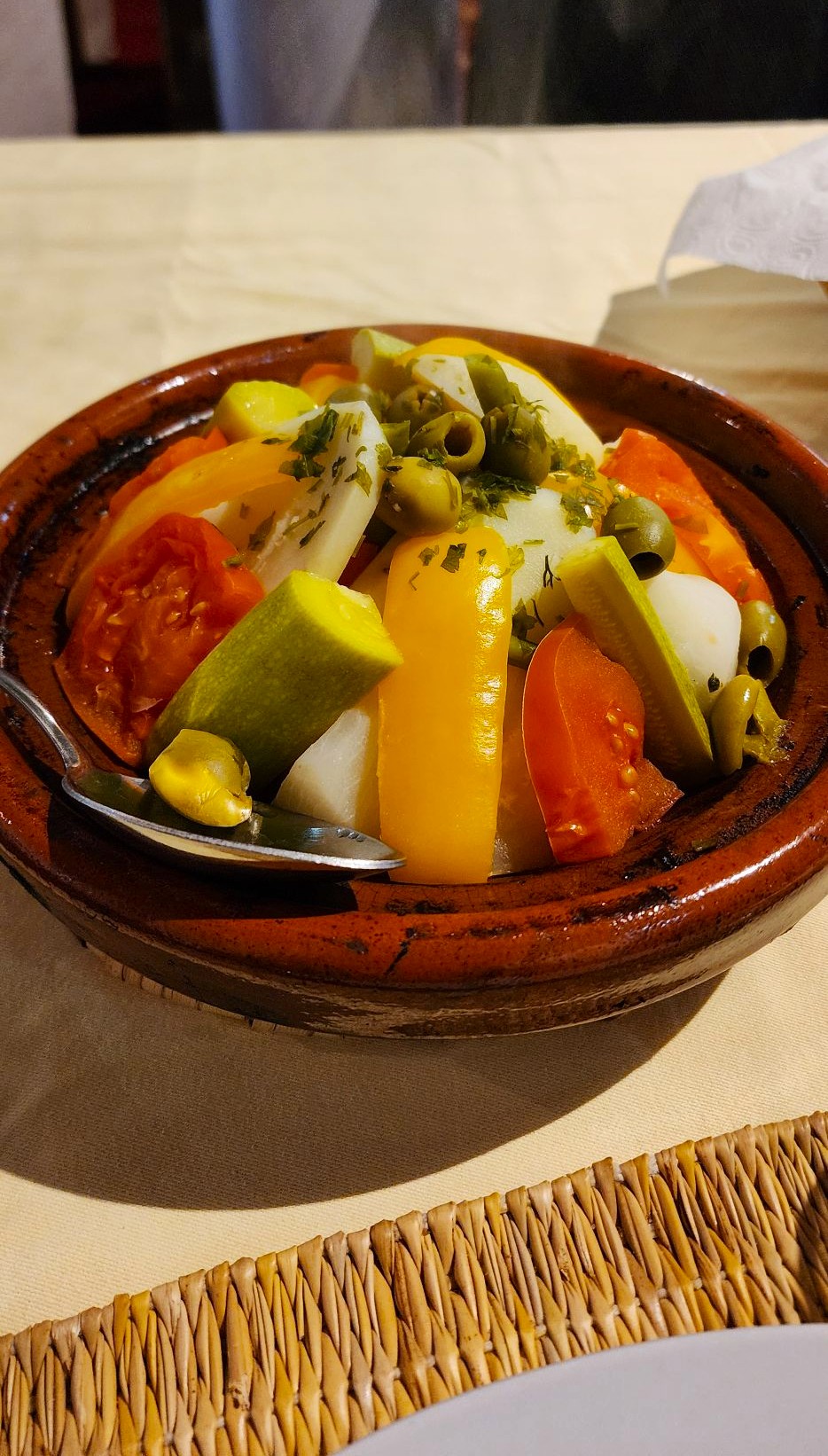
After breakfast we hit the road for the 5 ½ hour drive to Dades Valley. At the midway point, we detoured to visit Aït Benhaddou, which is a historic fortified village (Ksar) along the former caravan route between the Sahara and Marrakech. It is a very popular site because of its really cool Moroccan earthen clay architecture, It is also a UNESCO World Heritage Site. Many movies were filmed here, such as Gladiator, Kingdom of Heaven, and Game of Thrones among others. Upon arriving there was a restaurant named MaisonD’hotes Nouflla and I had another tagine (I told you, you will eat a lot of tagines here). But you gotta love the way they present the tagines in Morocco, by lifting the lid at the table while the food is still bubbling and letting the delicious aromas hit you. After some sightseeing we moved on since we still had a lot of miles in front of us.

When we arrived here we found that it was really cold in the Atlas mountains, especially in the evening! One of my only regrets of the trip was only staying at this location for only one night. I missed out on some good hiking and other tours. I did spend the time I had here, driving the winding scenic roads and had the chance to see the amazing Dadès Gorge Road, which is a cool zigzag road that runs through Dades Valley. It is also one the most dangerous roads in Africa. We met young man dubbed the “Camel Kid”, a local teen who hangs out around the village with a young camel making himself some coins by allowing tourist to take photographs with his camel. We ended the night with dinner with a few other tourists we met at Auberge Miguirne chez Ali a local hotel with a friendly staff, that can also cook a great lamb tagine. In the morning, it would be time for the next leg of our trip, the village of Merzouga in the Sahara Desert. Well that is it for part one of this road trip, and I hope you are enjoying the ride so far. We still have four more stops on this long journey, so I’ll see you next time. Thank you for reading!

Please Subscribe for Updates
Share this:


Posted on March 14, 2025, in Food, Foodie Road Trips & Other Fun Things and tagged Aït Benhaddou, africa, African food, atlas mountains, belly dancers, bissap, camel meat, Carabineros Prawns, casablanca, casablanca central market, chef, chicken chepper, comptoir darna, cous cous, Dadès Gorge Road, dades gorges, fes, food and travel blog, food tour, hassan II mosque, hirira, international drivers permit, jemaa el-fnaa square, kefta tagine, khlea, M'semen, Mafe, marrakech, marrakesh, medina, merzouga, midelt, moroccan blog, moroccan food, Moroccan police, moroccan taco, morocco, morocco blog, Morocco road trip, north african food, north-africa, pastilla, rabat, Restaurant Black Chich, Restaurant OLEA, Riad, riad sindibad, seafood, senegalese food, slow cooked lamb, souks, Spanish fusion cuisine, sub-saharan food, tagine, Travel, traveling chef. Bookmark the permalink. 4 Comments.
 Gourmet De-Constructed
Great read. Looks like an amazing trip. I look forward to reading your additional blogs on this once in a lifetime adventure. Love the pictures as well as they provide prospective for what I am reading. Thank you for sharing!
LikeLiked by 1 person
Thank you for visiting Stacey!
LikeLike
Pingback: Moroccan Khlea & Egg Omelet | Gourmet De-Constructed
Pingback: A Foodie Road Trip: North African Edition (Part Two) | Gourmet De-Constructed